

SAMANTHA YEM CALLS FOR EVIDENCE-BASED PUBLIC DISCOURSE AMID REGIONAL DEBATE OVER WEST POINT ADMISSION CLAIMS
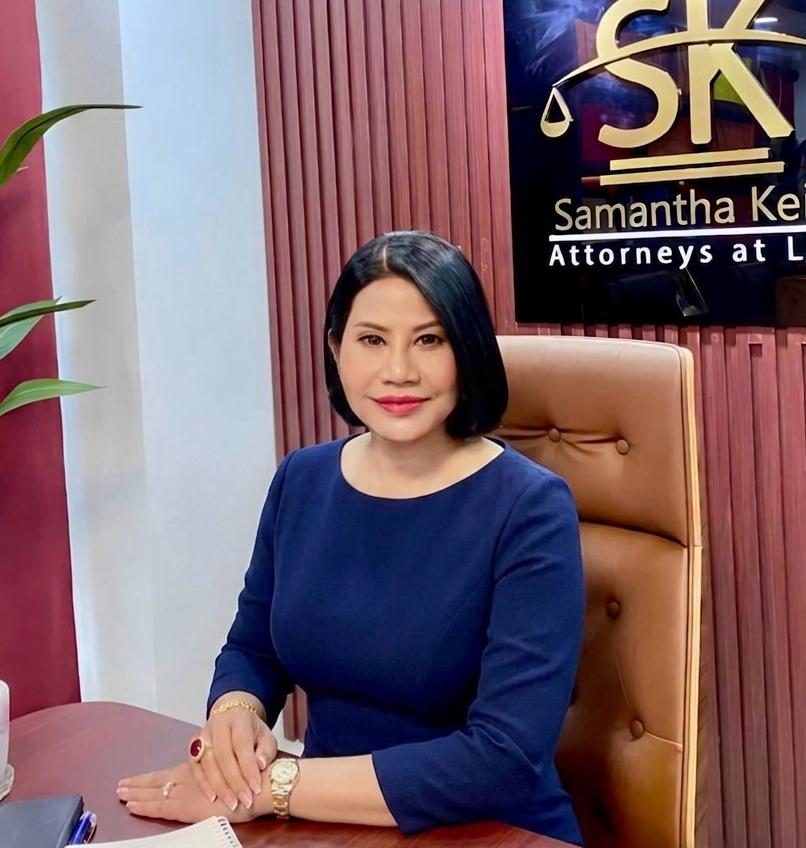
Samantha Yem
The discussion emerged after claims circulated in segments of Thai media and social media questioning the circumstances of Hun Manet's admission to West Point. The allegations suggested he attended the academy through a military quota allocated to Thailand rather than Cambodia.
Hun Manet has publicly stated that he was nominated by Cambodia's Ministry of National Defence and received endorsement from the U.S. Embassy in Phnom Penh before being admitted to the academy as a Cambodian cadet.
According to Yem, the significance of the controversy extends beyond any individual political figure and reflects a larger issue affecting societies around the world: whether public debate remains grounded in verifiable evidence or increasingly becomes shaped by speculation and unverified narratives.
"Institutions exist to create records, procedures and accountability," Yem said. "When questions arise, those questions should be evaluated through evidence and documented facts rather than assumption."
Yem said the controversy serves as an example of how geopolitical tensions and national competition can increasingly influence discussions involving education, professional achievement and international institutions.
While political disagreements between neighboring countries are not uncommon, she noted that disputes can become more problematic when they begin to affect perceptions of factual matters that are capable of verification through official records and established procedures.
The issue has attracted attention across Southeast Asia, where historical relationships, territorial disputes and political differences occasionally shape public narratives. Analysts have noted that social media platforms often amplify such debates, allowing claims to spread rapidly before supporting evidence is examined.
Yem said the phenomenon is not unique to Cambodia or Thailand.
Across the world, questions involving academic credentials, professional accomplishments and public records have increasingly become subjects of online controversy. In many cases, narratives develop and circulate widely before underlying facts are reviewed through official documentation or institutional channels.
The growth of digital communication has accelerated the speed at which information travels across borders, creating both opportunities and challenges for public discourse. While online platforms have expanded access to information, they have also increased the visibility and reach of unverified claims.
According to Yem, this environment places greater responsibility on public institutions, media organizations and individual citizens to distinguish between documented facts and unsupported assertions.
She said confidence in public discourse depends on maintaining a commitment to transparency, verification and fairness regardless of the individuals or organizations involved.
The debate also highlights the role played by institutions such as military academies, universities, diplomatic missions and government agencies, all of which operate according to established admissions procedures, documentation requirements and review processes.
These systems, Yem said, exist specifically to provide accountability and create verifiable records that can be examined when questions arise.
Rather than treating allegations as established facts, she said, public discussions should begin with an examination of available evidence and documented procedures.
"Healthy societies depend on open debate," Yem said. "But meaningful debate requires a shared commitment to accuracy, fairness and evidence."
Yem's perspective is informed in part by a personal experience dating back more than two decades.
In 1999, while returning to Cambodia during a summer break from her academic career in California, Yem traveled on a commercial flight from Singapore to Phnom Penh. During that trip, passengers were informed that a young Cambodian aboard the aircraft had recently graduated from West Point and was returning home.
The individual was Hun Manet.
At the time, Yem did not know him personally and had no reason to believe the encounter would hold any future significance. However, she said the memory resurfaced when recent allegations concerning his admission to the academy began circulating online.
The experience reinforced for her the importance of distinguishing between firsthand events, documented records and retrospective speculation.
While the current debate centers on West Point, Yem believes the larger lesson concerns the protection of factual discourse itself.
She said modern societies face increasing pressure from misinformation, polarization and the rapid circulation of content through digital networks. These forces can make it more difficult for citizens to evaluate competing claims and determine which information is supported by credible evidence.
As a result, she argues that maintaining trust in institutions requires consistent adherence to objective standards of verification.
The issue carries particular significance for developing nations seeking greater international engagement and recognition.
Yem said that when citizens earn admission to respected international universities, military academies or professional institutions, those achievements contribute to their country's global reputation and should be evaluated according to documented facts rather than political narratives.
The same principle, she said, applies equally to all countries.
Strong national identities are built through investment in education, institutions and human capital rather than through efforts to diminish the accomplishments of others.
Cambodia and Thailand share centuries of historical, cultural and economic connections and will continue to interact as neighboring nations for generations to come. While disagreements between countries are inevitable, Yem said those disagreements should not undermine respect for truth or factual accuracy.
She emphasized that evidence-based dialogue ultimately benefits all parties by promoting transparency, accountability and public confidence.
As information continues to move rapidly across international audiences, Yem said governments, institutions, media organizations and citizens all have a role to play in ensuring that facts remain at the center of public discussion.
"The discussion should begin with the evidence and end with the evidence," Yem said. "Facts should never become casualties of political disagreement or national rivalry."
Samantha Yem
SK Law Office
23900477 ext.
email us here
Legal Disclaimer:
EIN Presswire provides this news content "as is" without warranty of any kind. We do not accept any responsibility or liability for the accuracy, content, images, videos, licenses, completeness, legality, or reliability of the information contained in this article. If you have any complaints or copyright issues related to this article, kindly contact the author above.
